 EN
EN

In accurate liquid handling is key to reliable analytical results. When preparing calibrators, dispensing PCR reagents, or diluting samples for viscosity determination small inaccuracies in dispensed volume can be transmitted through the entire analysis. False conclusions, wasted samples and non-compliance result from poor liquid handling. The good news is that good liquid handling is achievable through simple strategies. Following are tips to achieve superior liquid handling in your lab.
1. Select the Correct Pipette and Tip Combination
The first step of good liquid handling is using the right instrument for the volume. Using a 1000 µL pipette for a 10 µL aliquot will not result in accurate liquid handling as it is nowhere near its calibration range. Rule of thumb: operate your pipette at 35 to 100% of its nominal volume. Use positive displacement pipettes or automated liquid handlers for volumes below 1 µL.
Choosing the right tip is equally as important as the right pipette. Standard tips may not always form a proper seal with all pipettes which will lead to air leakage and volume errors. Ensure you are using tips recommended by the pipette manufacturer or certified for use with your pipette. Filter tips can help prevent aerosol contamination but will increase sample retention in the tip; they should only be used when necessary. Low retention tips are best for viscous liquids as they reduce the tendency of liquid to adhere to the tip wall and for volatile solvents ensure tip saturation. Pre-wetting by drawing up and dispensing the solvent 2-3 times prior to aspiration will saturate the air in the tip and reduce evaporative losses with volatile solvents.
2. Control Environmental Factors
Of the environmental factors affecting liquid handling temperature is paramount. Liquids expand and contract with temperature changes and pipettes are calibrated at ambient temperature—most commonly 20-25 °C. A significant difference between lab temperature and sample or reagent temperature will lead to inaccuracies in volume delivery. Always ensure your samples and reagents are at room temperature before you begin pipetting. Temperature controlled workstation or bath are recommended for temperature-sensitive assays.
Humidity is also important. Low humidity can lead to rapid evaporative losses with volatile solvents; a reduction in dispensed volume. High humidity levels can lead to moisture condensation inside the pipette affecting air displacement accuracy. Be sure to work efficiently with volatile solvents and consider using positive displacement pipettes or automated dispensers with reduced air movement for these types of solvents. Drafts from open windows, air vents and activity within the lab can impact your results by creating an uneven cooling of the pipette tip or liquid sample.
3. Use Proper Pipetting Technique
Even the most accurately calibrated pipette is useless if used improperly. Develop consistent technique. Pre-wet the tip by aspirating and dispensing the liquid three to five times prior to aspiration for the transfer to increase humidity within the pipette and reduce evaporative losses. Position the pipette tip 2-4 mm below the surface for microvolumes or 4-6 mm below the surface for larger volumes during aspiration. Avoid submersing the tip too deeply as this will cause excess liquid to adhere to the exterior of the tip.
Slowly and steadily press the plunger to aspirate the liquid. Avoid rapidly releasing the plunger, which may cause splashing or air bubbles and releasing it slowly can result in the sample drawn into the pipette barrel. Pause for one second after aspiration to allow the full volume to enter the tip. Position the tip 30-45 degree angle against the wall of the receiving vessel during dispensing. Push the plunger to the first stop, pause one second, then press to the second stop for total liquid delivery. Consider using reverse pipetting to improve accuracy with very small volumes or very viscous samples.
4. Automate Where Possible
The operator variability inherent in manual pipetting-differences in technique, fatigue, or even distraction-can add to inconsistencies in your results. Automated liquid handlers will deliver the exact volume every time. Once a method is programmed, a liquid handler will replicate it for thousands of repetitions without variation regardless of who starts the run.
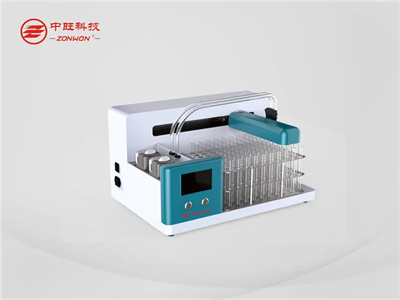
Automated dispensers are especially good at maintaining consistent pipette immersion depth and aspiration and dispensing speed; both key factors in reproducible liquid handling volumes. Serial dilutions are particularly well-suited to automation reducing chances for manual error during these lengthy and repetitive processes. Automated dispensers and liquid handlers manufactured by Hangzhou Zhongwang Technology are excellent choices for ensuring high accuracy and reproducibility for quality control laboratories and any environment where precise liquid volume can have a significant impact on results.
Summary
Good liquid handling is achieved through careful selection of pipette and tips, control of environmental factors, use of good technique and automation when beneficial. Each component contributes to minimizing the uncertainty of measurement and maximizing the reliability of the results obtained in your laboratory. Hangzhou Zhongwang Technology Co., Ltd. is pleased to provide automated dispensers, liquid handlers, viscometers, heating and stirring equipment, cold baths, ashing furnaces, vacuum technology, capillary viscometer tubes and consumables. Contact us today to see what we can do for you.