 EN
EN

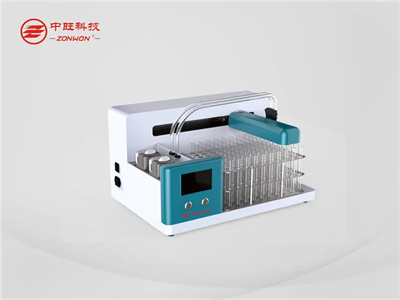
Laboratory professionals carry out thousands of pipetting actions each day. Daily repetition of this activity can cause fatigue, strain in muscles and the muscles in hands over time and more severe injuries including repetitive strain injuries such as carpal tunnel syndrome and tendonitis. Poorly designed pipettes not only affect user well-being but they also lead to inaccurate results because a fatigued hand tends to shake. It is more likely that different pressures will be exerted on the plunger and errors will be made. Pipette dispenser design—which includes ergonomics is not a feature to consider as a benefit but a necessity in any laboratory where accuracy is needed for correct results and good health for employees is considered important. We examine how ergonomics matters in pipette design and what to look for.
1. Reducing the Risk of Repetitive Strain Injuries
Repetitive strain injuries represent some of the most common occupational health hazards in a lab setting. The repeated actions of pressing the thumb onto the plunger to aspirate liquid and eject the tip, the attachments and ejection of the tip all put strain on the nerves and tendons in a persons' fingers, wrists and forearms. Over the weeks, months, and even years of this kind of activity then chronic pain, a decrease in grip strength and even permanent disability can occur.
Pipette dispensers which are ergonomically designed limit this risk. Some features to look for include low plunger forces that are usually anywhere between 3 and 5 Newtons when aspirating and ejecting liquid, a short range of thumb movement and natural posture where the hand is straight as oppose to at an angle. Some high-end models even use electronic power to assist you, decreasing your thumb effort. In labs where staff members are pipetting for hundreds and thousands of hours each day the investment is definitely worth it when thinking of employee health and long-term productivity.
2. Improving Consistency and Reducing User-to-User Variability
User fatigue has a significant effect on pipetting accuracy. A fatigued user is likely to have uneven plunger pressure, be inconsistent in timing when the plunger is depressed, and will have different plunger depths. In the long term, these variations lead to increase standard deviations and will cause problems with analytical results.
Ergonomic pipettes offer consistency throughout the workday. They feature handles which conform to the user's hands, easy plunger motion, and control buttons that are conveniently placed so less effort is required when pipetting. This means you don't need to put down the pipette and take frequent breaks just to get a rest. Ergonomic pipettes are intuitive which means there is a lower learning curve for new employees, and less variance between individual users. More reproducible data and fewer out-of-specification results will result from reduced fatigue.
3. Enhancing Throughput Without Compromising Quality
Laboratories constantly feel the need to boost throughput but this must not come at the cost of quality. If a lab is pipetting manually there are restrictions to how many samples an employee can perform, simply due to endurance and physical speed. The higher the fatigue levels go the lower speed and accuracy will fall.
An ergonomic pipette allows operators to work more quickly for a longer period without sacrificing quality. Because they require a lower amount of effort, each cycle takes less time and effort. Operators are less likely to take breaks due to fatigue and less likely to be making mistakes due to rushing such as incomplete aspiration or contamination of tips. In high throughput applications like PCR setup, plate filling, and serial dilution this will allow higher volumes to be achieved but to the same degree of precision as required.
4. Features to Look for in an Ergonomic Pipette Dispenser
When selecting a pipette dispenser consider the following ergonomic features.
Low plunger and tip ejection forces: should not compromise the seal on the tip but also should not require any significant strength from the user. Electronic pipettes require a virtually zero force on the plunger.
Adjustable handle and hook: is recommended so the pipette can be adjusted for different users' hand size, also it adds an extra support for the user and less force is required on the grip.
Contoured, non-slip grip: is beneficial because the soft surface will reduce the forces on the user's hands.
Short thumb travel: means that the distance the thumb needs to move from start to finish of the aspiration/ejection is minimal, thus less work for the user.
Electronic alternatives: should be used in any lab where thousands of liquid transfers will be required at any one time, eliminating any repetitive motion of the thumb altogether.
Summary
The ergonomic pipette dispenser has many benefits. The reduced risk of developing RSIs, increased user consistency, increased throughput without quality issues, and improved features allowing for more productivity at any one time make it a worthwhile investment in your employees' health and your lab's productivity. Hangzhou Zhongwang Technology Co., Ltd. provides automatic dispensers and liquid handlers as well as heating/stirring equipment, cooling constant temperature solutions, ashing furnaces, vacuum technology, heating and cooling equipment, capillary viscometer tubes and labware. Contact us to learn more about how our liquid handling solutions can improve your lab's accuracy and ergonomics.