 EN
EN

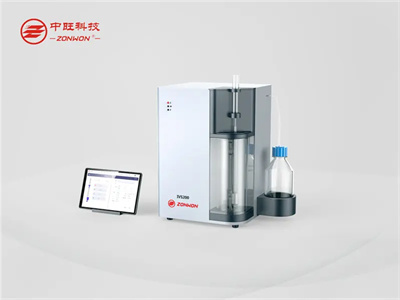
Molecular weight is the most critical molecular design parameter in the production of polymers and determines many mechanical, processing, and end-use properties of polymer products. The use of Intrinsic Viscosity (IV) is an objective, direct and precise measure of polymer molecular weight, hence is the most critical quality control parameter. Hangzhou Zhongwang Technology Co., Ltd has designed highly effective automatic viscometry solutions.
Defining Intrinsic Viscosity and Its Relationship to Molecular Weight
Intrinsic viscosity: this is simply the amount a polymer contributes to the viscosity of a dilute solution. Using Mark-Houwink equation, it can be related directly to molecular weight. Thus higher IV implies longer polymer chain length, resulting in higher MW, and lower IV refers to a shorter chain length resulting in a lower MW.
For example PET grade which will be used as a bottle-grade material would have IVs ranging between 0.73 and 0.86, whereas fiber-grade material needs to have an lower IV. This relation can also be approximately linearized, and used as an easy method to get a MW measure instead of more complex gel permeation chromatography analysis.
Impact on Material Properties and Processability
IV also dictates the basic properties of the material. Higher IV polymer means higher tensile strength, improved impact performance and better environmental stress cracking resistance. Higher IV resins also ensure the performance needed in applications for PET; specifically, higher IV grades are vital in the manufacture of soft drink bottles that require bursting strength, while low IV grades may be used in textile fiber applications.
Higher IV resins tend to have higher melt viscosity and will therefore be the subject to different processing conditions for extrusion, injection molding, etc. Processors need to determine and apply the right grades of IV in order to optimize processing and maintain consistency. Factors such as reaction time, temperature, and moisture level throughout the polymerization can lead to changes in IV, even in the smallest degrees, making on-going IV tracking a crucial part of quality control and control over material processes.
Quality Control Applications Across the Supply Chain
IV testing is applied in different parts of the polymer supply chain. Resin producers measure IV during polymer production, enabling them to monitor their process to produce to specification. Processors may test resins as they are delivered to the facility prior to unloading to verify quality and also check quality of mixtures containing recycled/regrind.
After processing the final part, IV can be rechecked to ensure the processing has not reduced the polymer to below its allowable specification. This monitoring is critical for the recycling process. Recycle operations utilize IV as a quality control test for incoming plastics and recycled plastics. Solid state polycondensation (SSP) increases the IV of recycled PET that may have decreased due to thermal degradation, and automated IV measurements allow manufacturers to obtain an exact measurement of MW recovery with a high sensitivity of just 0.007 dL/g change that aids to implement tighter control parameters.
Modern Automated IV Measurement Solutions
Manual Ubbelohde glass capillary viscosimeters, while providing an accurate measurement, can be slow and labor-intensive to use. Manual instruments are highly susceptible to variability as they rely on the technique of each individual operator. The advantages of automated viscometers in industrial QC applications include enhanced reproducibility by automating the dissolution of your PET and the measurement itself. Increased sensitivity to small changes in the distribution profile of the molecules making up the polymer and is directly compatible with both samples currently coming out of the extruder or your production stock without any additional steps.
Automating the analysis process cuts your analysis time, decreases the amount of solvent that you will use, and most importantly, is geared to provide results for immediate decision making within the process. The instruments have a reproducibility that is well below the generally accepted value of 2% standard deviation for QC. By removing human handling of potentially hazardous chemicals automated systems offer an improvement for technician safety and health as well.
Summary
Line Measuring intrinsic viscosity (IV) of raw materials and final products during polymer production is a critical, rapid and reliable measurement of molecular weight, which plays a role to material properties, processing and performance of the products. Modern, automated viscometry instruments are highly efficient, reliable and safe for production use over manually-intensive methods. At Hangzhou Zhongwang Technology Co., Ltd., we are always dedicated to developing innovative liquid handling and viscosity measurement products for your manufacturing process. Contact us to inquire about how our automated viscometers can improve quality control of the polymer manufacturing process.