 EN
EN

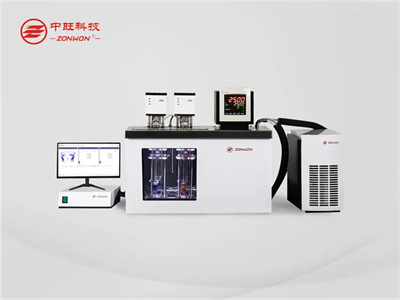
Intrinsic viscosity measurement for quality inspection is the most important physical index in the plastic industry, which affects the properties and manufacturability of materials and the quality of final products. Hangzhou Zhongwang Technology Co., Ltd, is a nationally qualified high-tech enterprise and has obtained more than 80 independent intellectual property rights, providing a variety of intelligent automatic viscometry products for the vast number of plastics manufacturers to carry out accurate production of modern plastic.
The Relationship Between Intrinsic Viscosity and Molecular Weight
An established indirect and effective measure of a polymer’s molecular weight via use of the Mark-Houwink relation. Increased values reflect greater length of the polymer chains (and therefore, greater molecular weight), and reduced values, reduced chain length and smaller molecular weight.
For a PET sample, intrinsic viscosity would commonly span 0.73 to 0.86 dL/g for bottle grade resin and values smaller than 0.73 dL/g would be selected for fiber grade usage. Due to the relatively linear relation, Intrinsic viscosity is used as quick surrogating technique to ascertain molecular weight of the polymer rather than using cost prohibitive and complicated gel permeation chromatography method.
What can you deduce from the information above about a polymer with intrinsic viscosity 0.80 dL/g used for beverage bottles. Intrinsic viscosity of the polymer determines important factors of its material properties; polymers with higher intrinsic viscosity will be tougher with greater tensile strengths, improved impact and improved stress cracking resistance in addition to their greater molecular weights. In case of PET it would determine it applicability, with high intrinsic viscosity, suitable for carbonated beverage bottles requiring higher bursting resistance or low intrinsic viscosity for fibers and textiles.
Impact on Processing Behavior and Manufacturing Efficiency
The way the material processes is greatly dependent on the molecular weight which is reflected in intrinsic viscosity (IV). Higher molecular weight resins have higher melt viscosity. The higher the melt viscosity the more you will have to modify extrusion profiles, injection molding cycles, and energy usage. Choosing the right intrinsic viscosity grade will help the manufacturer fine tune their particular processing system and this has to be checked regularly in a well-maintained process.
Even if the material specification hasn't changed, over the course of a production run even slight changes in polymerization time, temperature, or moisture can bring about subtle but significant changes to intrinsic viscosity. Without a measure of this you may not catch these changes until your product is tested and your first run requires expensive reprocessing or is scrapped. With a real time measure of IV, this variation can be caught and process controls adjust to bring things back to the proper level.
In the case of recycling applications the ability to measure intrinsic viscosity is vital. Recyclers use IV to sort incoming material, determine appropriate end-use applications, and to verify the molecular weight distribution of reprocessed polymers. This is particularly important for applications that use solid-state polycondensation processes to increase molecular weight following thermal degradation that has reduced IV, since real-time IV measurement ensures effective material recover.
Quality Assurance Across the Supply Chain
We all check intrinsic viscosity at various points in the plastics supply chain! - Resin manufacturers may measure at the completion of polymerization to be certain that the material meets customer specifications. Processors may check the intrinsic viscosity of incoming resin before unloading to be sure that it is of suitable quality; they may also measure the percentage of regrind or recycled materials in the mixture. The final part testing also may measure intrinsic viscosity; this verifies that the processing does not significantly alter the polymer below minimum acceptable standards.
When high-performance engineering plastics such as, automotive parts, aerospace composites or implantable medical devices require stringent properties (mechanical, thermal, and/or chemical), maintaining constant molecular weight as measured by intrinsic viscosity becomes even more important.
Those involved in the plastics industry need to have robust and accurate intrinsic viscosity measurements to facilitate acceptance and certification under various international standards, such as ISO or ASTM.
Modern Automated Intrinsic Viscosity Measurement Solutions
Compared to manual methods which can be error prone in Ubbelohde style methods with a long processing cycle, and requires careful preparation of sample and careful execution from technician, automated viscometers for plastics manufacturers provide better efficiency and quality control. Modern automated viscometers offer enhanced reproducibility since the dissolution process and analysis have a well-controlled protocol. This type of instrument exhibits greater sensitivity to even slight differences in polymer molecular weights and a reduced need for specific pre-conditioning protocols for in-line production samples.
Automating the determination of intrinsic viscosity saves the analyst time, conserves expensive solvent resources and delivers a report that can be used for on-the-spot quality control decisions if applied on the production floor.
Automated methods are repeatably to within generally accepted industry precision limits, removing the need for manual operation of glass parts thereby reducing operator variability while enhancing operator safety by decreasing operator contact with hazardous solvents. In the modern laboratory, these highly automated instruments will reduce the requirement for operator-assisted sample dissolution and provide built in sample preparation functions, temperature control capabilities, as well as an on-board data analysis system for your quality control needs.
Hangzhou Zhongwang Technology Co., Ltd provides efficient, repeatable and highly automated viscometry instruments for plastics manufacturer to monitor their production. Contact us today to know more about our products and how they will meet your specific quality control needs.