 EN
EN

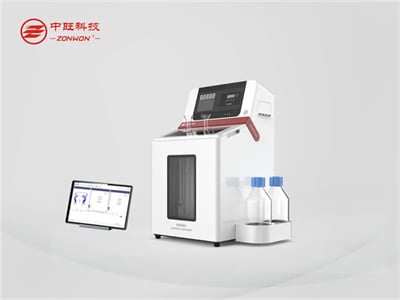
Choosing the right kinematic viscometer is an important decision for any petroleum, polymer, chemical or pharmaceutical laboratory. An appropriately selected instrument will enhance accuracy, increase throughput, and reduce overall cost. An improperly selected instrument can result in inaccurate, unreliable results, the need for repeated recalibration, and frustrated lab personnel. In order to help you select the best kinematic viscometer for your laboratory, here are some of the top features that one should consider.
1. Precision Temperature Control
Viscosity is a very temperature sensitive parameter. For many lubricants and polymer solutions a variation of as little as 0.5 °C will result in an increase of several percent in viscosity, making it impossible to draw any useful conclusions about the product. Because of this, precision temperature control is a critical parameter when selecting a kinematic viscometer.
You will want to look for an instrument that has the ability to maintain the bath temperature within ±0.01°C to ±0.02°C of the target temperature throughout the entire working volume. This usually implies a robust circulation system within the bath so that thermal gradients do not develop throughout the working bath. Additionally, the viscometer will likely include a built in PRT (platinum resistance thermometer) and will require an external PRT for proper operation and traceable calibration. If you will be running numerous viscosity measurements on varying samples, one may consider a unit that has the capability to run programmed temperature ramps so that viscosity measurements can be made at multiple temperatures without requiring an operator's intervention. Hangzhou Zhongwang Technology is able to manufacture automated viscometers that include stability baths capable of meeting the strict requirements ofASTM D445 and ISO 3104.
2. Automated Flow Time Detection
Manual timing of the meniscus through a capillary viscometer using a stopwatch is another source of error during a kinematic viscosity measurement. The variability of human reaction time alone makes it impossible to achieve reproducible results between different measurements, and with dark or opaque samples it may even become impossible to visually detect the exact position of the meniscus.
You will want to choose a viscometer that automatically detects the flow time of the meniscus. This usually involves using optical sensors or thermal detectors to identify when the meniscus reaches the two reference points within the capillary. The time of transit is recorded electronically, removing human error. This automatic detection significantly increases reproducibility and allows the instrument to run unattended. For laboratories running multiple samples per day, this feature also leads to much greater throughput.
3. Integrated Cleaning and Drying Cycles
Manual cleaning of capillary viscometers is both time consuming and often inconsistent. Between each measurement a technician must fill the capillary, rinse it with solvent, remove all traces of the cleaning solvent, dry it with a stream of air or a vacuum source, and finally check to ensure the capillary has been completely cleaned. All of these tasks combined can take just as long as the actually measurement.
You will want to look for a kinematic viscometer that has automated cleaning cycles. Following a completed viscosity measurement, the viscometer will fill the capillary with one or more solvents and remove them, and then purge air or an inert gas through the capillary to dry it completely. These automated cleaning sequences can be programmed and are extremely consistent from run to run, allowing for a hands on time reduction of 70–80%. They also ensure that cross contamination from improper manual cleaning do not occur. Some models also have the capability to recover cleaning solvents for reuse.
4. Data Management and Connectivity
In modern laboratories, automation extends to data management as well, making a paper free system the ideal configuration. A kinematic viscometer that does not communicate easily with your LIMS (laboratory information management system) will only create data silos and will likely require transcription of data from paper to computer, creating further sources of error.
The viscometer should include integrated data storage and should offer connections to your computer network either through USB or Ethernet in order to simplify the import of data into your LIMS. When selecting the appropriate instrument, you should ensure that all critical test parameters (sample identifier, temperature of test, time of flow, viscosity result, date and time of measurement and the operator) are stored electronically. If your lab is required to operate under GLP/GMP or an ISO quality system such as IATF 16949 or ISO 9001, then an audit trail feature is required to maintain the integrity of the results. Some instruments even allow for remote access and control of experiments.
Summary
The top features to look for in a kinematic viscometer are precision temperature control, automated flow time detection, automated cleaning and drying cycles, and convenient data management and connectivity. These features will contribute to improved accuracy, higher throughput, reduced manual labor and ensure that you meet all of the necessary quality standards for your lab. Hangzhou Zhongwang Technology Co., Ltd is able to manufacture and distribute automated viscometers for both oil and polymer analysis as well as the accessories that accompany them, such as the capillary tubes and consumables themselves, the required heating and stirring baths as well as cooling baths, vacuum pumps, and the proper apparatuses to dispose of all waste generated by the test. Please contact Hangzhou Zhongwang Technology today and one of our representatives will assist you in determining the optimal kinematic viscometer for your lab.