 EN
EN

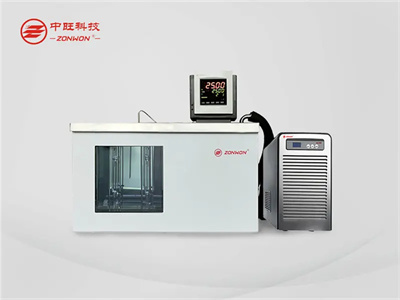
Viscosity testing is important for quality control in many industries, including petroleum refining, polymers, lubricants and food. Traditional manual viscosity testing, performed using glass capillary tubes and stopwatches, is time-consuming, labor intensive and prone to operator error. Automation of viscosity testing has changed this critical analytical method, yielding significant improvements in lab efficiency, data quality, and operational costs. The four primary benefits of automated viscometry systems are.
1. Elimination of Human Error and Improved Accuracy
Human error, inherent in all manual measurement techniques, is one of the largest sources of variation in manually acquired viscometry data. In manual testing, the operator is required to properly fill the capillary, remove any bubbles from the sample, achieve exact temperature control of the measurement cell, accurately start/stop a stopwatch while observing the meniscus pass between the calibration marks. Even between tests performed by the same individual, the difference in reflex time varies, and an unskilled operator can introduce other variable factors during a measurement. It can be exceedingly difficult to accurately measure the flow time of a dark and opaque fluid or of a fast flowing solvent sample in a manual viscosity test.
In automated viscometry, an optical or thermal sensor accurately detects the meniscus as it passes through the calibration marks, stopping/starting a timer electronically, removing any operator reflex time, and also removing the human element of judging the passage of the meniscus between points. This yields a much higher level of repeatability and reproducibility in measurements. Many studies have shown that automation of viscometry increases the precision of the measurements by 50-80% over manual testing. For those laboratories that must work to a strict specification, this increased precision will yield fewer out of specification results and reduce the need for rework.
2. Dramatically Increased Throughput
A manual viscometer can perform only one test at a time. Between each measurement, the capillary must be cleaned out with solvent, allowed to dry and then re-filled. During periods of high production, the measurement of viscometry can become the rate limiting step and contribute significantly to product delays.
Automated viscometry systems were designed to increase throughput. Many systems have multiple capillary tubes within a single constant temperature bath so multiple samples may be tested in parallel. Automatic cleaning and drying of each tube between measurements drastically reduces the operator intervention required for each sample. It is simple to load the samples and allow the instrument to run the sequence. An automation capability of this type can yield 300-500% greater throughput without additional operators.
3. Reduced Operating Costs and Labour Requirements
Skilled laboratory technicians cost money and it is inefficient to tie up their time with manual viscometry testing when those skills could be better used for method development, troubleshooting, and other analytical tasks. The hands on time required for each viscosity measurement can be reduced by 70-80% with automated viscometers, freeing the technician up to perform these more critical functions.
In addition to labor savings, automated viscometers also reduce operating expenses through increased solvent efficiency. Automatic cleaning routines use precisely controlled amounts of solvent for cleaning each capillary tube, thereby reducing wasted solvent and the associated waste disposal expenses. In some cases, automated systems may also incorporate features for solvent recovery. The combination of labor savings and solvent/waste reductions can rapidly provide the return on investment for automation equipment.
4. Enhanced Data Integrity and Regulatory Compliance
Organizations with quality management systems such as ISO 9001, IATF 16949 or pharmaceutical compendia, are often required to document evidence of their measurement results. Manual methods typically involve recording data in a logbook or on a spreadsheet, then transcribing those values into a LIMS or database. There is a greater risk of transcription error, missing data, and of creating data that is difficult to audit.
An automated viscometer will directly record every result, including sample identification, temperature, flow time, calculated viscosity, date and time of the test, and the name of the operator running the test. Changes to the methods or test results are typically recorded in an audit trail. Direct interface to a LIMS further minimizes the possibility of human error in data entry. For those laboratories operating in a regulated environment, automation provides the highest level of data integrity.
Summary
Automated viscometry systems can bring four primary benefits to your laboratory: eliminate operator error, significantly increase sample throughput, reduce operating costs through savings in labor and consumables, and enhance data integrity for regulatory compliance. Automation provides the most cost effective path to achieve quality improvements in viscosity testing. Hangzhou Zhongwang Technology Co., Ltd. offers automatic viscometers for oil and polymer viscosity testing, along with auxiliary equipment such as liquid handling, heating/stirring, cooling systems, ashing furnace, vacuum systems, capillary tubes and consumables. Contact Zhongwang today to bring the benefits of automated viscosity testing to your lab.