 EN
EN

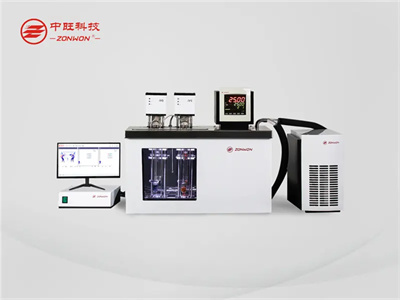
Measurement of viscosity is an integral part of quality control in many industries including petroleum and polymer industries through to pharmaceuticals and food processing industries. However, viscometers are not all the same. Two of the more common types are: kinematic and dynamic (also called absolute) viscometers. Knowing the difference between each is essential if you are choosing an instrument for your specific application to ensure that the results obtained are appropriate for the purpose and that industry standards are met. Here are the key differences.
1. Definition and Measurement Principles
Kinematic viscometers measure a fluid's resistance to flow when force is due to gravity, and determine kinematic viscosity. The kinematic viscosity of a fluid is the ratio of dynamic viscosity to density. The most common kinematic viscometers are capillary type (e.g. Ubbelohde and Cannon Fenske) in which the time taken for a measured volume of liquid to flow through a calibrated capillary, under the action of gravity is measured and expressed in units of centistokes (cSt) or mm²/s.
Dynamic (absolute) viscometers measure a fluid's resistance to flow when a force other than gravity is applied. They directly measure the dynamic viscosity (which is also called absolute viscosity), which is a measurement of the internal resistance of a fluid to flow under an externally applied force, regardless of its density. Common designs are: rotational, falling ball and oscillating piston type viscometers, results being expressed in centipoise (cP) or millipascalseconds (mPa·s).
2. Typical Applications and Industries
Kinematic viscometers are best suited for tests carried out on Newtonian type fluids. These are liquids where the viscosity does not change with shear rate. Typical applications include:
Petroleum products (e.g. Lubricating oils, fuels and bitumen)
Polymers and resins
Paints and coatings
Food oils and syrups
Many international standards e.g. ASTM D445 use kinematic measurements of petroleum products. Zhongwang's automated viscometers used to measure the viscosity of oil and polymers satisfy the requirements for testing and have a high precision.
Dynamic viscometers are useful for testing both Newtonian and non Newtonian liquids. These include:
Adhesives, sealants and printing inks
Pharmaceuticals (gels, creams, pastes)
Cosmetics (e.g. Lotions and shampoos)
Polymer melts and solutions
Food products (e.g. Ketchup, yoghurts, chocolate)
3. Instrumentation and Automation
Traditional kinematic viscometers are often manual and involve the operator stopping a stopwatch as the liquid passes over a mark and require subsequent cleaning of the glassware between tests. Manual systems can be labour intensive and also subject to operator errors. Modern automated kinematic viscometers, available from Zhongwang, measure flow times using an optical sensor, with a constant temperature bath and a computer system that initiates and stops the timing automatically. This removes the subjectivity and variability from the process of manual kinematic viscometer measurements. They have multiple test channels for simultaneous operation on several samples.
Dynamic viscometers range from simple hand held instruments to automated rotational type instruments, with adjustable shear rates, and the addition of a constant temperature control unit. Fully automated dynamic viscometers are able to characterize the sample across a variety of shear rates, for example to determine flow curves and yield stress. The liquid handling and constant temperature control solutions from Zhongwang are very valuable to dynamic viscometers by maintaining sample preparation.
4. Choosing the Right Viscometer for Your Lab
The type of viscometer you need will depend on the type of fluids you test, and the results that you require.
You should consider using a kinematic viscometer if:
You are testing Newtonian fluids such as oils, polymers or fuels
Your industry standards (e.g. ASTM, ISO) specify measurements of kinematic viscosity
You want a simple, highly reproducible test that is cost-effective
You require highly automated testing.
You should consider using a dynamic viscometer if:
You are testing non-Newtonian type fluids
You want to know the viscosity at different shear rates
You need to measure samples such as gels, pastes and thick materials
You want to perform further characterization of the sample rheology than just viscosity.
Summary
Kinematic viscometers use measurements of gravity-driven flow and are suitable for Newtonian fluids such as oils and polymers. Dynamic viscometers use force based measurements and are applicable to both Newtonian and non-Newtonian samples. The selection of a suitable viscometer is important for correct laboratory measurements and quality control, and compliance with standards. The automated viscometers from Hangzhou Zhongwang Technology Co., Ltd. are designed to support you whether you are carrying out tests requiring the measurement of oil and polymer viscosity using kinematic principles or other fluid viscosity measurements using dynamic techniques, supplemented by our precise liquid handling, heating, stirring, cooling and constant temperature solutions. Contact us to learn more about how our viscometer solutions can benefit your lab.