 EN
EN

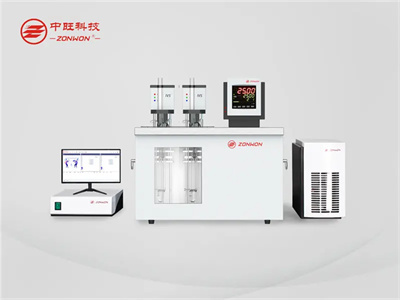
For decades, the method of manual kinematic viscosity testing using glass capillary tubes, stopwatches, and handwritten logs was standard. However, this method of testing is time consuming, relies heavily on human factors, and is not suitable for high throughput labs. Automated kinematic viscometers have changed the way this test is performed and provide dramatic laboratory efficiencies due to their precise temperature control, optical detection, and intelligent software:
1. Eliminating Manual Timing and Operator Variability
With manual viscometer testing, an operator watches for the meniscus to cross two different timing lines and manually activates and stops a stopwatch. Due to human factors, reaction times are different for everyone, and for everyone across different tests. This leads to measurement errors which could even be greater than acceptable margins—especially with samples which flow quickly or are dark colored. Automated kinematic viscometers use optical sensors or thermal detection which measures flow times automatically, eliminating human errors and varying reaction times. As every test runs under the same protocol every time, these systems can provide results that are consistent day to day and across all operators. This alone has improved many laboratories' quality for high volume oil, polymer or fuel testing environments.
2. Increasing Throughput with Parallel Testing
The manual method relies on the operator to do one test at a time. When running through samples, each has to be cleaned and dried by hand between tests which limits the volume of testing possible for one technician. Some automated instruments can be equipped with several capillaries that are kept at the same temperature in one bath, increasing sample throughput by several times. An example of this is a system which can run eight or more samples at once. This drastically cuts down test times from many hours of operator interaction to just a few minutes of interaction. This is critical for laboratories with multiple dozen oil, polymer or fuel samples per shift which they need to analyze with current staff numbers.
3. Reducing Cleaning and Downtime
One of the most time consuming aspects of manual kinematic viscosity testing is the cleaning between samples. The operator must clean the capillary tube by washing out the sample, drying the tube and verifying no remnants of previous samples are left. This can take as long as or longer than the test itself. Automation drastically reduces hands on time by having an automatic cleaning cycle at the end of each test; after a sample is finished, the capillary will flush out, dry and then run the next sample automatically. Hands on time is decreased by 70-80% allowing technicians to concentrate on data analysis, new methods, or another process in the lab. In addition, a precise cleaning protocol reduces cross-contamination that can result from inadequately manually cleaned samples.
4. Streamlining Data Management and Compliance
Results from a manual viscosity test are usually manually entered into paper logs or spreadsheets. The data entry process can introduce transcription errors. Tracking samples through the test process, as well as associating test results with specific batches or tests, can also be challenging. Automated kinematic viscometers integrate into laboratory information management systems (LIMS) and store all information directly, as well as providing audit trails. These systems create automatic logs of all data (including sample ID, test temperature, flow time, calculated viscosity etc) so that each sample is traceable from the time it was loaded into the instrument through the end of its analysis. Automation makes compliance to ISO 9001 standards much easier to maintain because there is no chance of human error in manual data entry or data retention. Trends can be viewed as tests are performed allowing proactive steps to be taken.
Summary
To increase laboratory efficiency with minimal human interaction and consistent, repeatable results, automated kinematic viscometers are the next step in viscosity testing. By eliminating manual measurements, enabling parallel testing and easy integration with laboratory software, these instruments have modernized this test. Hangzhou Zhongwang Technology Co., Ltd. can provide both oil and polymer automatic kinematic viscometers along with all the supporting equipment you may need for liquid handling, heating, stirring, cooling, ashing furnace, vacuum technology, etc., and we would be happy to consult on your viscosity testing needs. Contact us for more information!