 EN
EN

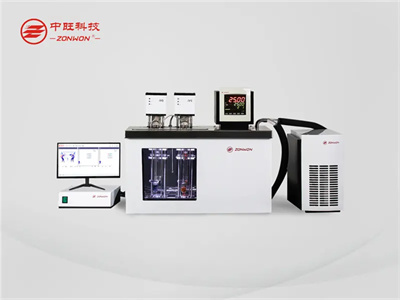
The product's lifespan, stability, and application performance for severe conditions and other aspects are based on their product's durability, key product performance parameter. Product design and external conditions of application will influence durability, while molecular weight is the core determinant. Intrinsic viscosity can directly measure the molecular weight, convenient, reliable indicator and tool for users to predict the product's durability. Our team at Hangzhou Zhongwang Technology Co., Ltd., a national high-tech certified company and an enterprise with more than 80 independent intellectual property rights, designs automated viscometry systems, and can use automatic viscometers to better enhance product's durability through the management of product's molecular weight.
The Molecular Basis of Durability
It also plays key role in determining the impact strength, toughness, and environmental resistance of polymers as whole. Short polymer chains—corresponding to low molecular weight and low IV—cannot interact as extensively or form as many entanglements as longer chains, resulting in inferior mechanical properties. Therefore for the same polyethylene type, intrinsic viscosity, since it is direct indicator of molecular weight, also indirectly tells you how strong polyethylene it is likely to be.
Because it reflects molecular entanglements in sample of polymer and since the long strands of polymers can slip, or entangle with each other and cannot come apart and in fact support each other against breakage due to an imposed load (stress).
If you apply load in case of long, entangled polyethylene molecules they can and may indeed distribute the stress along the lengths of the many chain molecules. Thus, it comes as no surprise that to make rigid enough to support gas pressures, like those exerted inside container of fizzy drinks, you would need to make some sort of polyethylene beverage bottles which are also made from polyethylene terephthalate. However, for example, when you start using engineering type polymers where some level of strength and resistance to wear and degradation is required to be applied at high stress levels.
Mechanical Properties and Failure Resistance
This increased range of intrinsic viscosity has led to significant impact on several of the mechanical characteristics that make product wear resistant. Tensile strength, for example, is function of the molecular weight of product and consequently product’s molecular weight dictates product’s intrinsically viscous measurement. The same can be said of impact resistance, tensile strength at rupture point and product's elongation at break,.
High values for each of these, and several other properties are all function of polymer's intrinsic viscous measurement and molecular weight and product manufactured using this increased range will feature superior toughness, and will endure higher strains before rupturing or tearing occurs.
Creep resistance (the capacity to hold its dimensions for sustained period) is also significantly improved for high intrinsic viscous measure products. These products will not suffer any reduction in their intended functional or performance metrics over an extended time. This is vital for product piping systems, or structural load-bearing applications.
Environmental Stress Cracking Resistance
Environmental stress cracking is frequent failure mode of plastic products used in contact with aggressive chemical products or in harsh environment. This type of failure arises from an interaction between stress and external agents that leads to the initiation and propagation of crack at molecular level. The intrinsic viscosity of polymer influences the environmental stress cracking behavior of polymers.
Indeed, greater chain entanglement makes crack propagation less probable, reducing susceptibility to ESC. It represents critical parameter in order to maintain material integrity when using applications as: fuel tanks, storage of chemical materials, medical devices, piping. Polyethylene's environmental stress cracking behavior increases when the molecular weight becomes higher, therefore observing the variation of intrinsic viscosity can provide the quality for products which could come into contact with chemicals.
Processing Degradation and Long-Term Performance
During the polymer processing, when polymers are heated, undergo shearing and may be exposed to oxygen, molecular chain scission occurs, which lead to molecular weight degradation. This degradation can affect the overall strength and durability of the finished product.
Intrinsic viscosity can be determined before and after processing so that process engineers have an insight to degree of degradative degradation to adjust process conditions, thereby reduce degradation and maintain the product durability to the fullest. Especially when the parts are expected to be used at extreme conditions where maximum longevity is crucial (i.e. Car components that withstand load, outdoor products, medical instruments), such practice is particularly important.
In recycling field, it helps in formulating reusable durable plastic parts through accurate measurement. Recycled polymers are always characterized with molecular degradation due to previous use/processing. Therefore, the recyclers are able to evaluate incoming materials quality and formulate the recycled product with desired molecular weight such as, Measured by intrinsic viscosity, so that final product meeting performance expectations.
Summary
The intrinsic viscosity affects the wear resistance of plastic products, the measured intrinsic viscosity is an effective measurement index for indicating the relative molecular weight, and the material’s mechanical properties, impact resistance, and long-term durability depend largely on it. If the intrinsic viscosity can be precisely controlled, and wear-resistant products with excellent performances can be manufactured, they are the choice for hard conditions. Hangzhou Zhongwang Technology Co., Ltd. has an innovative automated viscometer for helping you. If you have needs, contact our specialists at any time.